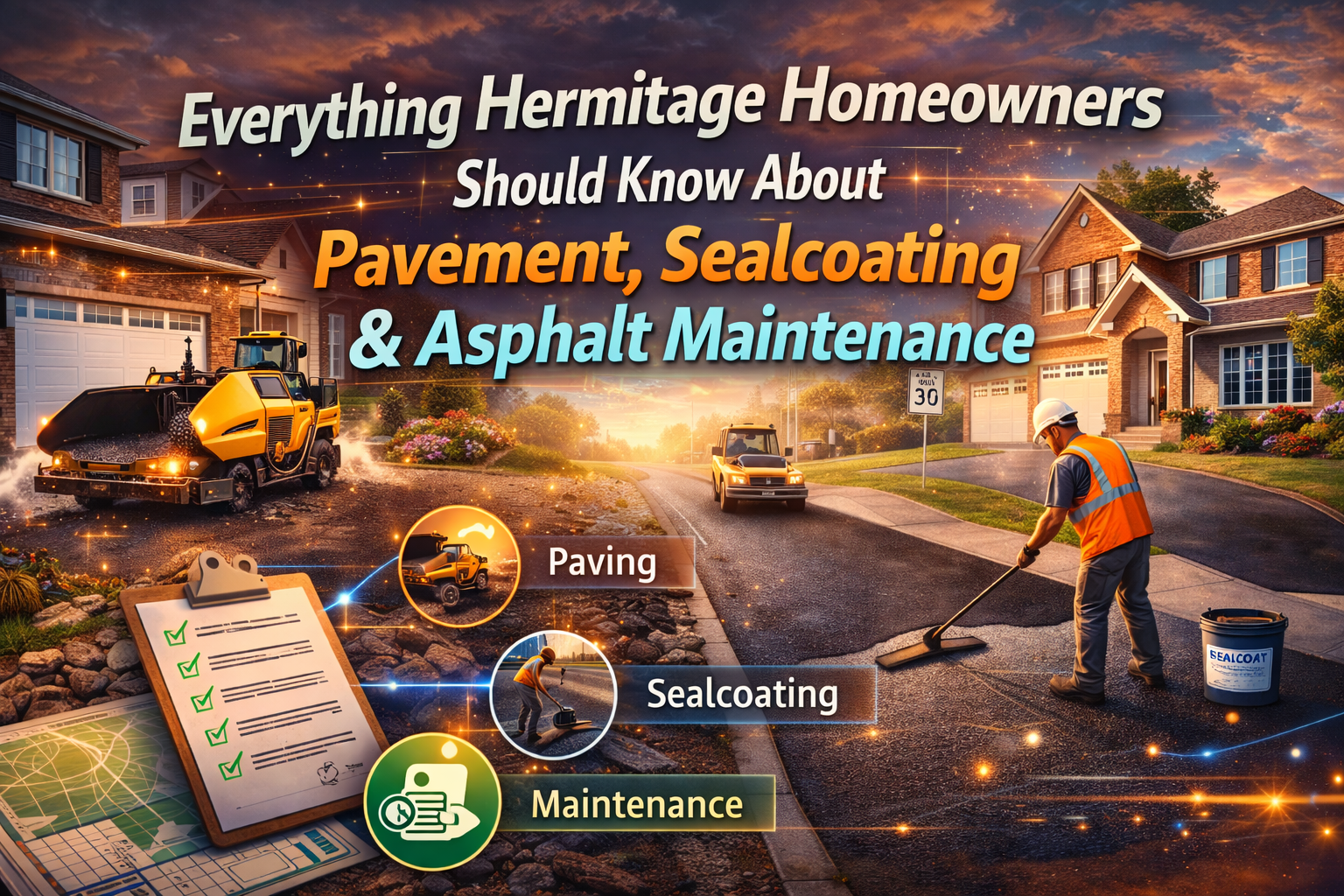
Hermitage, Tennessee is one of Nashville’s most storied communities. Named after the historic estate of President Andrew Jackson, this vibrant east Nashville neighborhood blends deep historical roots with modern suburban life. As the area continues to grow with families, businesses, and commercial development expanding along major corridors like Interstate 40 and Route 70 the demand for quality pavement and surface maintenance has never been higher.
Whether you own a residential driveway, manage a commercial parking lot, or oversee a retail property in Hermitage, understanding how asphalt and pavement systems work can save you significant time, money, and headaches down the road. This guide addresses the most common questions people ask about paving, sealcoating, and pavement maintenance with a specific focus on what Hermitage’s climate and conditions mean for your surfaces.
What Does a Paving Contractor Actually Do?
A paving contractor is a licensed professional who installs, maintains, and repairs paved surfaces using materials such as asphalt, concrete, or specialized pavers. The scope of work typically includes:
- New installation laying a completely fresh asphalt or concrete surface over a properly prepared base
- Resurfacing (overlay) applying a new asphalt layer over an existing sound structure to restore functionality
- Sealcoating applying a protective liquid barrier over asphalt to shield it from UV rays, water, oil, and oxidation
- Crack filling and patching addressing localized damage before it spreads
- Line striping painting parking lot markings, directional arrows, and safety zones for compliance and safety
A skilled Paving Contractor Hermitage handles projects ranging from small residential driveways to full commercial parking lots, ensuring proper base preparation, drainage planning, and material selection suited to Tennessee’s climate.
Why Does Asphalt Degrade Over Time?
Asphalt is a durable material, but it isn’t immune to wear. Several natural forces work against it continuously:
UV Oxidation Sunlight breaks down the binder (bitumen) in asphalt, causing it to dry out, become brittle, and fade from black to gray. This is one of the primary reasons asphalt begins to crack even without heavy traffic.
Water Infiltration Water is arguably the biggest enemy of asphalt. When moisture seeps into small surface cracks, it weakens the base layers beneath the pavement. In Tennessee, where seasonal temperature swings occur frequently, freeze-thaw cycles can expand those cracks dramatically, turning hairline fractures into significant structural problems.
Traffic Load Repetitive vehicle weight compresses and fatigues the pavement surface. Over time, this creates ruts, depressions, and what is commonly known as “alligator cracking” a pattern of interconnected cracks that resemble the scales of an alligator’s skin and signals serious structural stress.
Chemical Exposure Oil, gasoline, and antifreeze that drip from vehicles eat through the asphalt binder over time, softening the surface and accelerating deterioration around driveways and parking stalls.
Understanding these forces helps property owners in Hermitage make informed decisions about when to maintain, repair, or replace their pavement.
How Long Does Asphalt Pavement Last?
With proper installation and routine maintenance, asphalt pavement can last anywhere from 20 to 30 years. However, that lifespan is heavily dependent on a few critical factors:
Base Preparation The most important factor in pavement longevity is what happens beneath the surface. Properly graded, compacted, and stabilized subbase layers are the foundation of any durable pavement system. Cutting corners during this phase inevitably leads to premature failure, regardless of how good the surface asphalt looks.
Drainage Design Poor drainage causes water to pool on or around pavement, accelerating base erosion and cracking. A properly designed paving project accounts for slope, runoff direction, and nearby landscape features.
Maintenance Frequency Pavements that receive regular sealcoating, crack filling, and timely patching significantly outlast those that are left without attention. Neglected asphalt may fail in as few as 10–12 years, while well-maintained surfaces can comfortably exceed 25 years.
Traffic Volume Residential driveways generally last longer than commercial lots because they carry less daily load. High-traffic commercial surfaces require more frequent maintenance cycles.
Roads and highways, even under extreme traffic, often reach 20 years or more when properly designed and maintained a testament to what systematic pavement care can achieve.
What Is Sealcoating and Why Does It Matter in Hermitage?
Sealcoating is one of the most cost-effective forms of pavement maintenance available to property owners. Think of it as a sunscreen and weatherproof jacket for your asphalt it creates a protective layer that guards against the elements that cause premature deterioration.
What sealcoating does:
- Blocks UV rays from oxidizing the asphalt binder
- Creates a waterproof barrier that prevents moisture infiltration
- Resists oil, gasoline, and chemical spills
- Restores the dark black finish, significantly improving curb appeal
- Fills minor surface voids and smooths small hairline imperfections
What sealcoating does NOT do: It’s important to understand that sealcoating is a preventive surface treatment not a structural repair. It cannot fix potholes, alligator cracking, or base-level failures. Any significant cracks wider than ¼ inch should be addressed through crack filling before sealcoating is applied. Applying sealcoat over unrepaired damage simply masks the problem temporarily and can lead to worse outcomes later.
Hermitage’s Climate Consideration: Middle Tennessee experiences hot, humid summers and cool, occasionally icy winters. This combination of UV exposure, summer heat, and occasional freeze-thaw cycles makes sealcoating particularly valuable in Hermitage compared to milder climates. The protective layer slows oxidation during the intense summer months and reduces moisture intrusion that could expand during cold snaps.
How Often Should You Sealcoat in Tennessee?
Industry professionals and pavement experts generally recommend sealcoating every 2 to 3 years for residential driveways and high-traffic commercial areas. For lower-traffic surfaces in good condition, an interval of 3 to 4 years may be appropriate.
Here are a few signs that your asphalt surface needs sealcoating:
- Color has faded from black to gray This is the most visible indicator. When asphalt turns gray, the top layer of bitumen has worn away, leaving the surface exposed and vulnerable.
- Loose gravel on the surface Known as raveling, this happens when the bitumen binder begins separating from the aggregate rock.
- Small surface cracks beginning to appear Cracks are a warning sign that water is already starting to penetrate the surface.
- Surface feels rough or brittle underfoot or under tire A sign that the asphalt binder has dried significantly.
One important note for new pavement: freshly laid asphalt needs time to cure before sealcoating is applied. Sealing too early can trap natural oils in the asphalt and interfere with proper curing. Most contractors recommend waiting 6 to 12 months after new installation before the first sealcoat application.
When applied correctly, a quality sealcoat lasts 2 to 5 years, depending on traffic levels, weather exposure, and how well the surface was prepared beforehand.
Asphalt vs. Concrete: What’s Right for Your Hermitage Property?
A common question among homeowners and property managers in Hermitage is whether to choose asphalt or concrete for their driveway or parking area. Both materials have merit the right choice depends on your priorities.
Asphalt Advantages:
- Lower upfront installation cost (typically 40–50% less than comparable concrete)
- Flexible surface that absorbs load and minor base movement without cracking as severely
- Cracks can be repaired and blended more seamlessly than concrete repairs
- Easier to maintain through sealcoating cycles
- Darker surface absorbs heat and melts light ice faster in winter
Concrete Advantages:
- Extremely durable and long-lasting with minimal maintenance required after installation
- Does not require regular sealcoating cycles
- Handles heavy vehicle loads (like RVs or commercial trucks) with less surface deformation
- Lighter surface reflects heat, which can be more comfortable in full sun
The Long-Term Cost Equation: Even factoring in sealcoating every 3–4 years, asphalt tends to cost less than concrete over a 20-year period due to the significant difference in initial installation cost. Concrete, while lower maintenance, requires a larger upfront investment that takes many years to offset.
For most residential driveways and small commercial lots in Hermitage, asphalt remains the most popular choice for its combination of affordability, performance, and ease of maintenance.
The Asphalt Paving Process Explained Step by Step
Understanding how professional paving is done helps property owners know what to expect and recognize quality workmanship:
Step 1 Site Assessment and Preparation A professional paving contractor begins by evaluating the existing surface and subgrade conditions. Any unstable soil is addressed, proper drainage slopes are established, and the area is cleared of vegetation and debris.
Step 2 Subbase Installation A layer of compacted gravel or crushed stone is laid as the foundation. This base layer is critical it distributes the load from the surface above and provides drainage pathways beneath the asphalt. Thickness varies based on expected traffic load and soil conditions.
Step 3 Binder Course (If Applicable) For thicker installations, a binder course of larger aggregate asphalt is laid first to add structural depth before the surface layer.
Step 4 Surface Asphalt Installation Hot-mix asphalt heated to over 300°F is laid using a paving machine to ensure even distribution and thickness. The fresh asphalt must be compacted while still hot using heavy rollers, which removes air pockets and achieves the density necessary for durability.
Step 5 Edging and Finishing Edges are hand-tamped or machine-compacted to prevent premature crumbling. Drainage transitions and connections to existing pavement are carefully finished.
Step 6 Curing Period New asphalt requires a curing period before it can support full traffic loads. Light foot traffic is generally acceptable within 24 hours, but vehicles should typically stay off new residential pavement for 48 to 72 hours, depending on temperature conditions.
Step 7 First Sealcoat (6–12 Months Later) Once the pavement has fully cured, the first sealcoat application protects the investment and begins the long-term maintenance cycle.
Pavement Striping: More Than Just Aesthetics
For commercial properties, parking lots, and multi-use surfaces in Hermitage, line striping is a critical component of a complete paving project not merely decorative. Properly applied pavement markings serve several important functions:
Safety Clear directional arrows, pedestrian crosswalks, fire lane markings, and stop bars reduce the likelihood of accidents in busy parking areas.
Compliance ADA (Americans with Disabilities Act) requirements mandate specific dimensions, quantities, and markings for accessible parking spaces. Non-compliant parking lots can expose property owners to legal liability.
Traffic Flow Efficiency Well-designed striping maximizes the number of usable parking spaces while ensuring safe vehicle movement through the lot.
Professional Appearance Crisp, bright line markings communicate care and professionalism to customers, tenants, and visitors an underrated aspect of commercial property curb appeal.
Striping should be refreshed whenever sealcoating is applied, as the new sealcoat layer covers old markings. High-visibility, durable traffic paint is the industry standard for exterior pavement applications.
Common Pavement Problems and What They Mean
Recognizing different types of pavement distress helps property owners act before small problems become expensive structural failures:
Alligator (Fatigue) Cracking Interconnected cracks that form a pattern resembling alligator skin. This indicates structural failure, usually at the base level. Surface treatments alone cannot fix this the base must be addressed.
Longitudinal Cracks Long cracks running parallel to the direction of traffic. Often caused by poor joint construction, base failure beneath a lane edge, or reflective cracking from an underlying layer.
Transverse Cracks Cracks perpendicular to traffic direction, commonly caused by thermal expansion and contraction or asphalt hardening due to oxidation.
Potholes Bowl-shaped holes in the surface caused by water infiltration beneath the pavement, which weakens the base until the surface collapses under traffic load. Always repair promptly potholes grow rapidly once water enters the void.
Rutting Longitudinal surface depressions in the wheel path caused by traffic load deforming an inadequately stable pavement structure or subgrade.
Raveling The gradual separation of aggregate from the asphalt binder, resulting in a rough, loose surface texture. Often indicates oxidized, aged asphalt that needs sealcoating or resurfacing.
Choosing the Right Paving Contractor in Hermitage
Hermitage and the greater Nashville area have no shortage of paving contractors, but quality varies significantly. When evaluating a paving professional for your residential or commercial project, here are the most important factors to consider:
Licensing and Insurance Tennessee requires contractors to hold appropriate state licenses for construction work. Always verify active license status and confirm the contractor carries both general liability and workers’ compensation insurance before any work begins.
Experience with Local Conditions Middle Tennessee’s climate, soil types, and rainfall patterns have specific implications for pavement design and maintenance. A contractor familiar with the Nashville metro area understands how to account for these variables.
Transparent Process Quality contractors explain their process, specify the materials they intend to use, describe the thickness of layers being applied, and provide a written proposal. Vague verbal estimates are a red flag.
References and Reviews Ask for references from comparable projects in the Hermitage area. Online reviews on trusted platforms provide useful insight into reliability, communication, and workmanship quality.
Proper Equipment Large commercial paving equipment, professional compaction rollers, and well-maintained sealcoating rigs indicate a serious, capable operation.
Final Thoughts: Pavement Is an Investment Worth Protecting
Whether it’s a residential driveway on a quiet Hermitage street or a commercial parking lot serving a busy shopping center, your paved surfaces represent a significant property investment. The good news is that asphalt is one of the most maintainable construction materials available regular attention dramatically extends its useful life and keeps it performing and looking its best.
The key principles are straightforward: start with proper installation, sealcoat on a consistent schedule, address cracks and damage promptly, and work with experienced local professionals who understand Hermitage’s specific climate and conditions.
By staying proactive rather than reactive, Hermitage property owners can protect their pavement investment for decades and avoid the far greater expense of premature replacement.